The property stays attached
Address, photos, and prior history stay on the case so the next visit is not a blank form.

Code Enforcement
Complaint, inspection, violation, notice, and reinspection stay on one case through resolution.
Inspectors see what happened before and what needs attention next.
Thin Line Code Enforcement is property and compliance software for complaints, inspections, notices, and resolution.
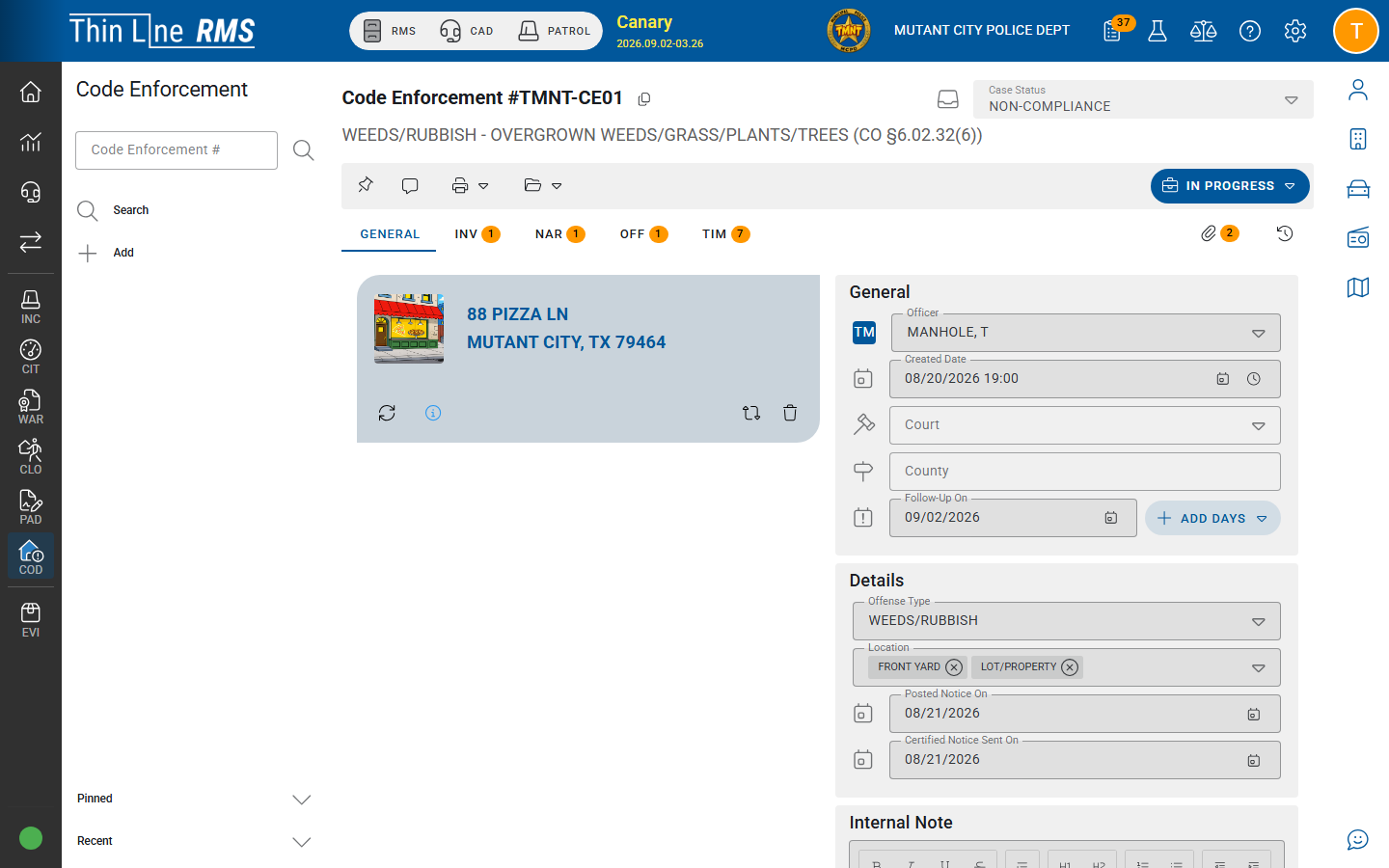
Explore the screenSelect a number to see how the work moves.
Address, photos, and prior history stay on the case so the next visit is not a blank form.
Owners, occupants, and contacts remain on the case.
Inspections, notices, photos, and violations remain on the case instead of a side file.
Deadlines, reinspections, and outstanding work stay visible. Nobody starts over.
What's in it
Ordinance cases, violations, status, and resolution on the property.
Addresses, owners, occupants, organizations, and contacts.
Findings, photos, notes, and reinspection on the same case.
Warnings, notices, compliance dates, and required follow-up.
Photos, correspondence, open cases, and outcomes from the cases officers already work.
The working case
The case follows the property from complaint through resolution. The next inspector inherits what already happened.
Ordinance cases carry status, ownership, violations, and history so officers are not reconstructing the matter from an address and a stack of notes. Opening the case shows what has already been done.
Addresses, photos, and related history stay with the case so the next inspection starts from the location staff already know. The property remains the through-line as cases open and close.
Ordinance violations, status, and resolution remain attached to the property and the responsible party. Staff can see what was cited last time without opening a separate list.
Scheduling, findings, photos, and notes become part of the case instead of a side inspection log. The next officer can see what was observed without a verbal handoff.
Photos, attachments, and supporting records remain on the case so compliance work can be reviewed without hunting a camera roll or a shared drive.
Warnings, notices, and documents stay on the case with the compliance date they create. Staff can see what was issued without reconstructing a paper trail.
Compliance dates and required follow-up stay visible on the case so overdue work is not hiding in a calendar. Supervisors can see what still needs attention.
Reinspections do not start over. Prior photos, notices, and findings remain attached so the return visit is a continuation of the work already done.
Inspections, notices, correspondence, and status changes remain in the case history so staff are not starting from an address and reconstructing the past.
Open cases, workload, compliance activity, and outcomes come from the same data officers used in the field — not a disconnected reporting spreadsheet.
Same case
Inspectors don't need the administrator's report, and administration doesn't need the inspection form. Each role sees the same case from the work they do.
See what happened before and what is due next.
See open cases, deadlines, and what still needs attention.
Sees documents and outcomes from the same cases.
Sees the property history when the next complaint arrives.
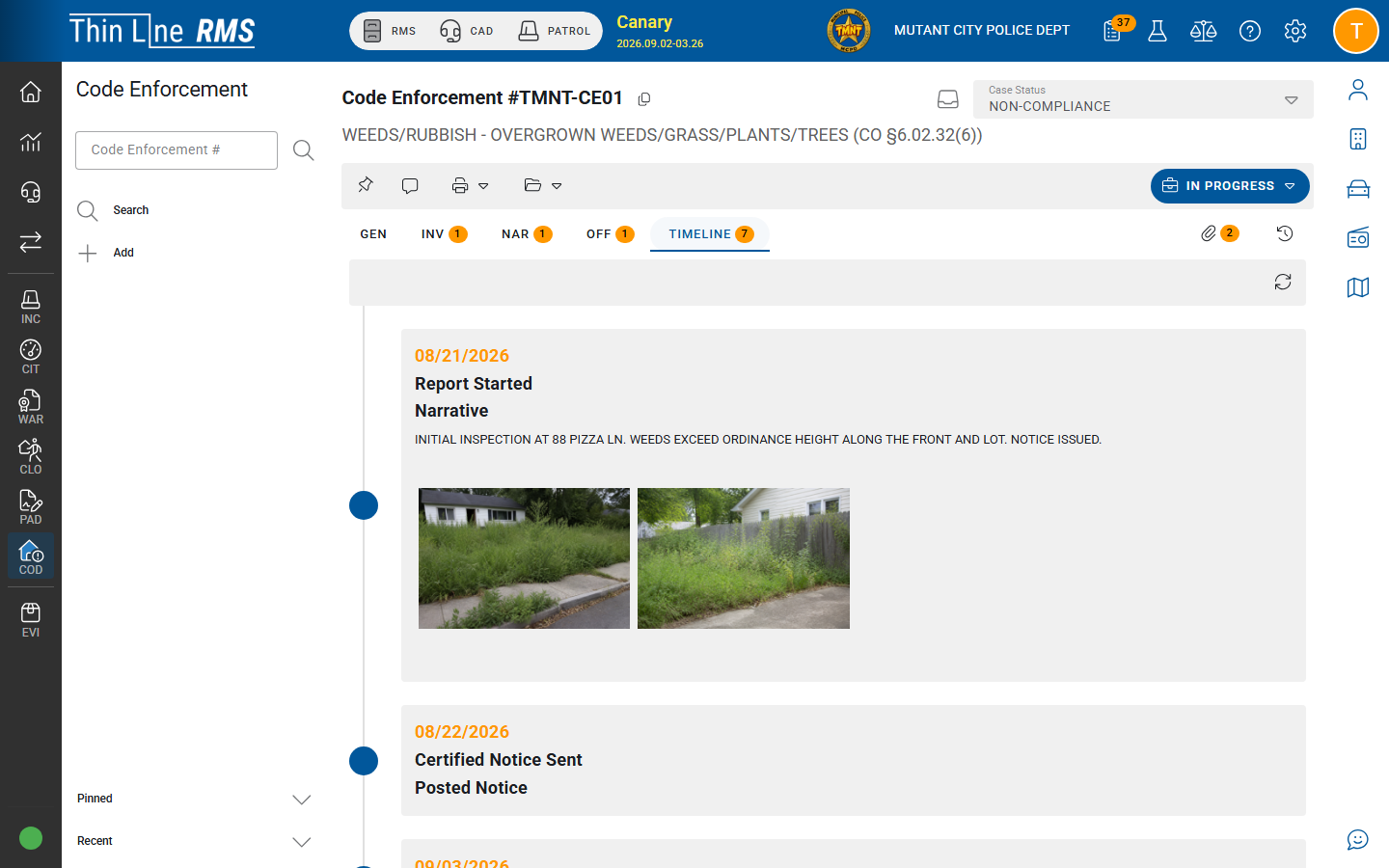
Explore the screenSelect a number to see how the work moves.
Where the work continues
Code Enforcement doesn't depend on another Thin Line product to work a property. But when an agency also uses RMS, people and addresses don't have to be rebuilt at the boundary.
RMS
When RMS is connected, authorized users can work from shared people and addresses without rebuilding the same information.
Bring your records
Moving to Thin Line shouldn't mean starting over. We work with your existing property and case history where it can come across, and validate it with your agency before go-live.
Evaluating the details?