Clerks spend less time rebuilding the case
The defendant, charge, appearance, and payment stay on the matter instead of being entered again.

Court
Thin Line keeps the case together from intake through appearance, judgment, payment, and close-out. The clerk sees what happened, what is due, and what comes next.
Thin Line for courts is municipal and justice-court software for citation-based cases from intake through disposition.
The work
Citations, complaints, defendants, violations, court dates, and the queue that starts the day.
Pleas, hearings, programs, compliance, judgments, and orders stay on the case.
Receipts, plans, deposits, allocations, and close-out stay tied to the matter.
FTA, court-owned warrants, bonds, collections, and required Texas reporting from the same case.
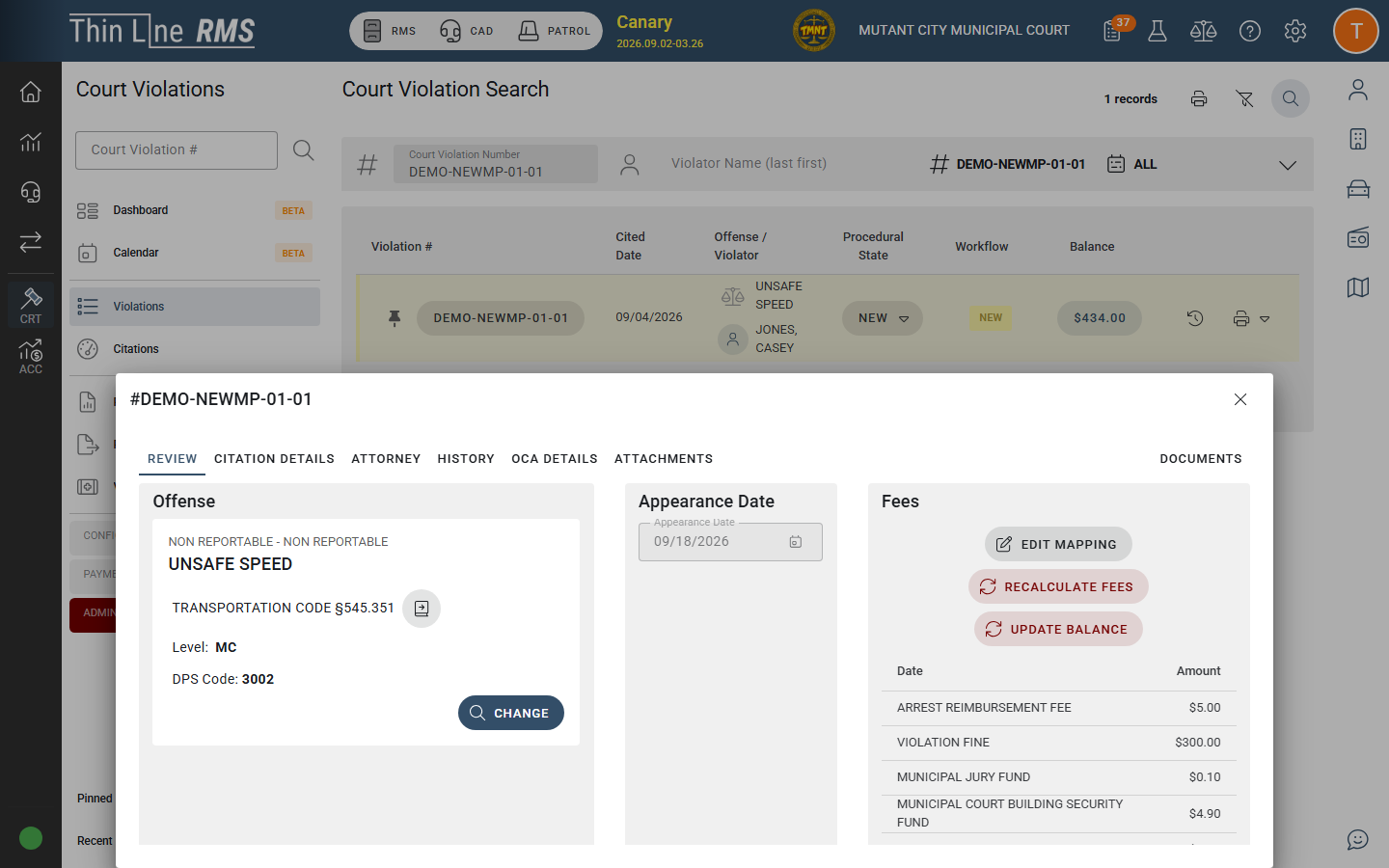
Explore the screenSelect a number to see how the work moves.
How the work moves
Where we help
The defendant, charge, appearance, and payment stay on the matter instead of being entered again.
Pleas, programs, balances, warrants, and prior actions stay attached to the case.
Receipts, plans, deposits, and close-out remain traceable to the originating case.
Deadlines, eligibility, documents, and dismissals stay with the matter instead of a side folder.
The story continues
Citation → Court
The defendant, citation, and charge become the start of the court case when RMS or Mobile Citations is connected.
Court warrant → Law Enforcement
A warrant issued by the court becomes work for the officers responsible for serving it. Ownership stays with the court.
Payment → Close-out
Receipts, plans, deposits, and reporting stay tied to the case that produced them.
Each court keeps control of its own cases. The next agency gets what it needs to continue the story—not a disconnected starting point.
Products
Designed for Texas municipal and justice-court Class C / fine-only cases, including traffic and ordinance violations.
From the field
Resources
Evaluating the details?