Law enforcement

Patrol starts the case. Investigations pick it up. Command sees what still needs work.

Thin Line keeps the record solid while the work moves from patrol to review, investigation, and command. Everyone works from the same case history without losing what came before.

Thin Line for law enforcement connects patrol, investigations, and command around one working case record.

The work

Built around the way your agency works.

  • Patrol & Field Operations

    Calls, contacts, citations, reports, evidence, and arrests—from the first response forward.

  • Dispatch & Response

    Calls come in, units move, statuses change, and the response takes shape.

  • Investigations

    Detectives pick up the case with the people, evidence, history, and follow-up already there.

  • Supervision & Command

    See what needs review, what needs follow-up, who owns it, and what still needs attention.

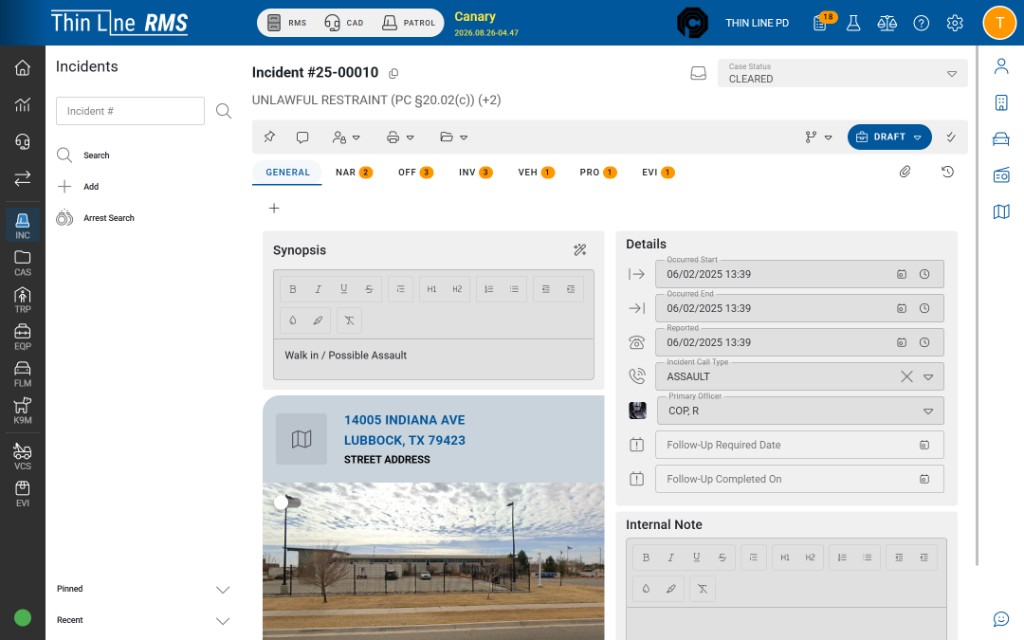
Thin Line RMS incident workspace with status, related work, people, and location

Explore the screenSelect a number to see how the work moves.

The incident is the working record—status, people, and what follows stay in one place.
  • 1. StatusSee where the incident stands and what still needs attention.
  • 2. Related workNarratives, offenses, people, and evidence stay on the same incident.
  • 3. People & locationSee who was involved and where, without leaving the record.

How the work moves

How the work moves.

  1. 1The call comes inDispatch captures what happened, where, who is involved, and how officers are responding.
  2. 2Officers respondPatrol adds the people, statements, offenses, evidence, citations, and arrests discovered in the field.
  3. 3The case takes shapeReports, evidence, related people and vehicles, supervisor notes, and follow-up build on what is already known.
  4. 4Someone picks it upA supervisor reviews it. A detective investigates it. Command sees what still needs attention. Nobody starts over.

Where we help

What changes when the record follows the work.

Patrol spends less time rebuilding information

Calls, contacts, citations, and reports carry forward instead of being entered again.

Investigators inherit the case, not just a report

People, vehicles, locations, evidence, notes, and prior activity are waiting when the case reaches them.

Supervisors see what still needs attention

Reviews, approvals, assignments, follow-up, and overdue work stay visible.

Command sees the operation, not just the records

See workload, open investigations, review queues, warrants, and activity across the agency.

The story continues

The case doesn't end at the agency door.

  • Arrest → Jail

    The person, charges, and arrest information are already there when booking begins.

  • Citation → Court

    The defendant, citation, charge, officer, and related details become the beginning of the court case.

  • Court warrant → Law Enforcement

    A warrant issued by the court becomes work for the officers responsible for serving it.

Each agency keeps control of its own work. The next agency gets what it needs to continue the story—not a disconnected starting point.

Products

The products behind the work.

  • RMSThe law-enforcement record for incidents, investigations, warrants, evidence, and reporting.
  • Mobile CitationsWrite it once in the field. Citation and driver information carry forward where authorized.
  • CADCalls, units, assignments, statuses, mapping, and response history on one live board.
  • PlatformThe shared foundation for people, places, vehicles, charges, permissions, documents, workflow, and audit history.

Resources

Guides for Texas law-enforcement work.

Evaluating the details?

See it with your operation in mind.

  • Tell us how your agency works today and where the friction is. We'll show you how Thin Line fits the work.
(806) 300-0455