Connected by default
People, places, vehicles, charges, evidence, and activity stay attached to the work they belong to.

RMS
Incidents, investigations, warrants, evidence, people, vehicles, and history stay connected from the first report through the work that follows.
The record captures what happened. The rest of Thin Line helps your agency put that record to work.
Thin Line RMS is a records management system for incidents, investigations, warrants, evidence, people, vehicles, and history.
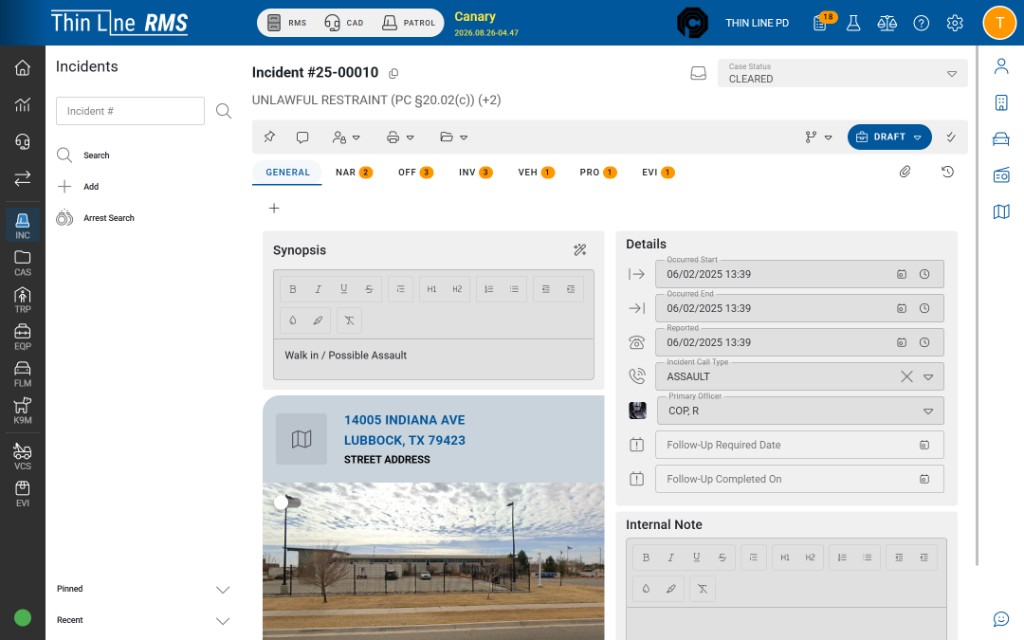
Explore the screenSelect a number to see how the work moves.
People, places, vehicles, charges, evidence, and activity stay attached to the work they belong to.
Changes, approvals, assignments, and activity remain on the record instead of disappearing into notes or another system.
A supervisor can read it, send it back, and approve it without the record becoming a copy of itself.
Investigation, supervision, reporting, and the next handoff can use the same information. Nobody starts over.
What's in it
Calls become incidents. Officers document people, offenses, narratives, evidence, vehicles, property, and what happened.
Detectives continue from the original incident with the case history, people, evidence, assignments, and follow-up already in place.
The things involved in one record remain available when they appear somewhere else.
Reports move through review while supervisors see what is waiting, what came back, and what still needs attention.
Search, reporting, retention, and required submissions work from the records the agency is already building.
The working record
The incident is not a report in storage. Officers, supervisors, and investigators keep working it.
What happened, who was involved, and what followed live on one incident—not a stack of disconnected forms. Officers, records, and supervisors keep working the same record as it develops.
A person, location, vehicle, or organization entered on one record remains available the next time they appear. Nobody re-enters the same facts.
The defendant, vehicle, offenses, and what happened are captured once. Records, reporting, and court can continue from that same citation.
Field contacts, notepad entries, and close patrol stay with the people and places they belong to—not in a side notebook.
When the case moves to investigations, the people, evidence, notes, and history are already there. Investigators take ownership and keep going.
Property, photos, documents, and chain activity remain on the incident instead of living in a side inventory.
Local warrants, service activity, and court-owned warrants remain available to the people responsible for serving them. Status stays visible.
Draft, submit, review, reject, and assign happen on the same record. Supervisors see what is waiting without chasing a copy.
Changes, approvals, assignments, and activity remain part of the record. History can be reviewed without reconstructing it.
NIBRS, TCOLE, and agency reporting come from the records the agency is already building—not a disconnected reporting system.
Same record
Patrol doesn't need Command's interface, and Command doesn't need Patrol's. Each role sees the same record from the work they do.
Sees what it needs to work the case.
See what they need to continue it.
See what needs attention.
Sees what needs completion.
Sees the operation.
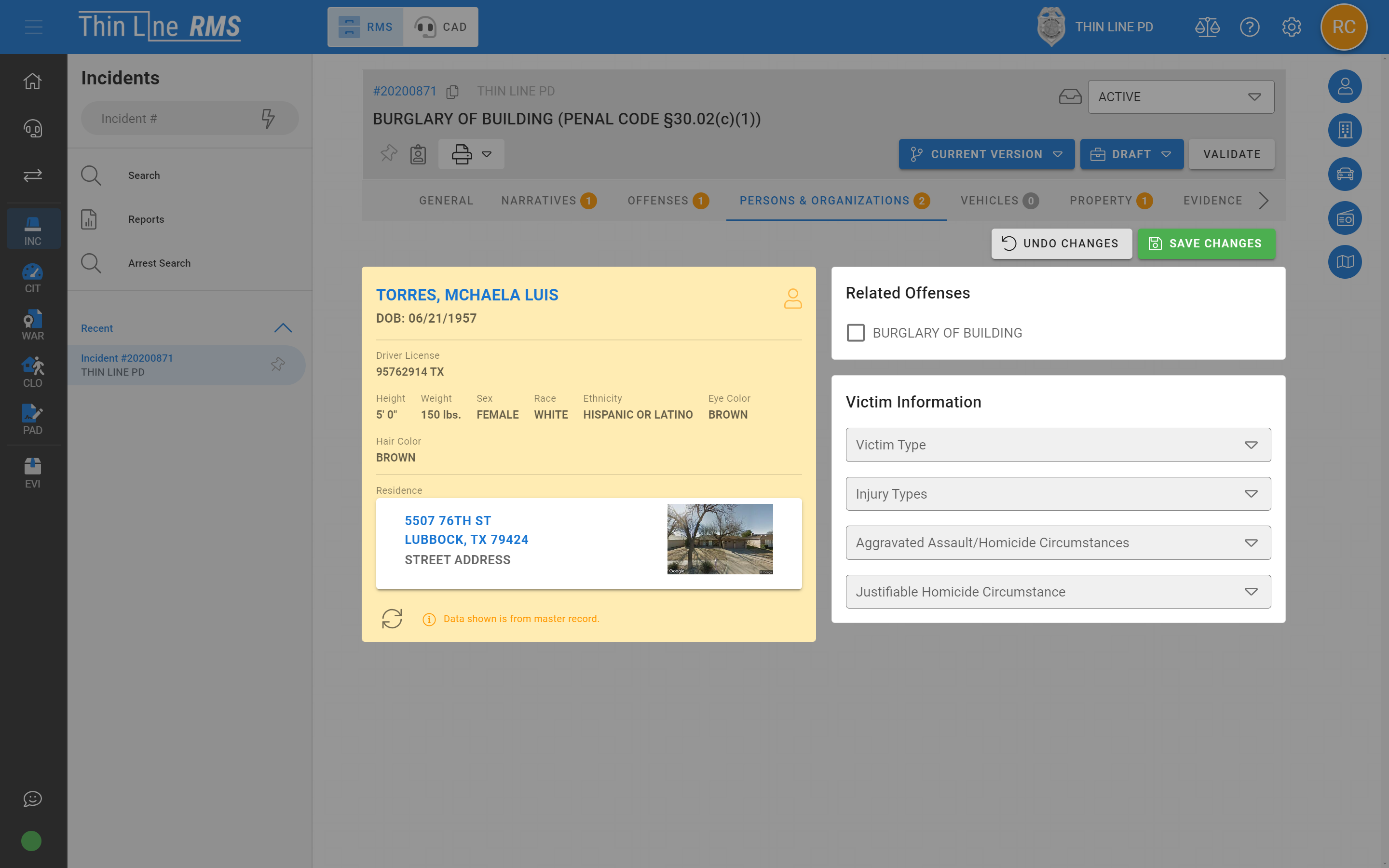
Explore the screenSelect a number to see how the work moves.
Where the work continues
RMS doesn't depend on another Thin Line product to do its job. But when an agency also uses CAD, Mobile Citations, Court, or Jail, the record doesn't have to start over at the boundary.
CAD
Calls can become incidents without rebuilding the call, people, location, or timeline.
Mobile Citations
Field citations and defendants continue into the same law-enforcement record.
Court
Citations, defendants, and charges can become the start of the court case.
Jail
The person, charges, and arrest information are already there when booking begins.
Bring your records
Moving to Thin Line shouldn't mean starting over. We work with your existing records, map the data into Thin Line, and validate the conversion with your agency before go-live.
RMS resources
Evaluating the details?